

AI makes it easy to get quick answers to all your burning questions. Whereas previously, many of our questions would go unanswered for lack of time / resources, now we can open up a chat, pop in our question, and get a somewhat decent answer in seconds.
In many ways, this is useful. It increases the knowledge of society.
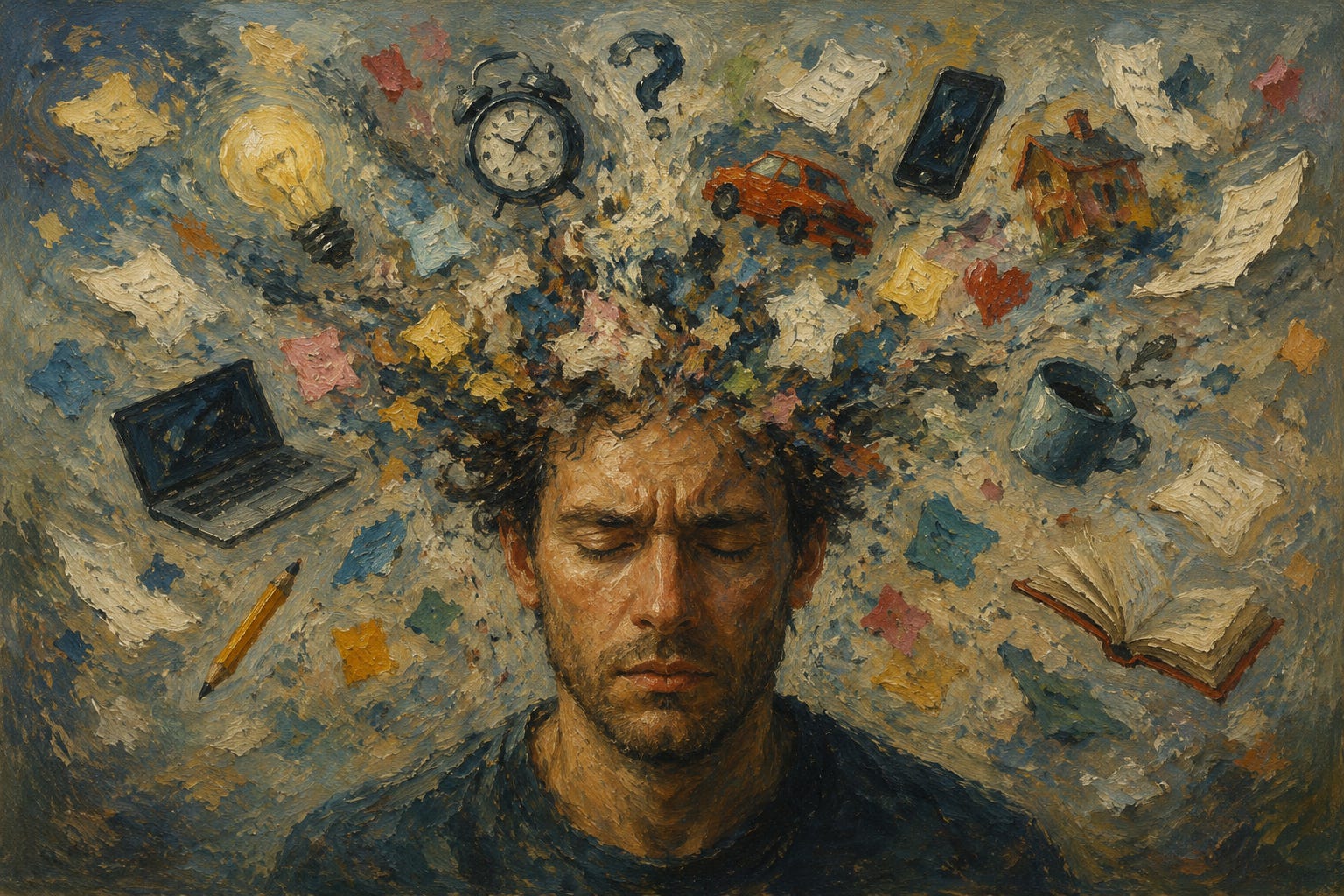
However, is it mostly increasing shallow knowledge? When we fire multiple questions at AI, it’s helping us learn a little about a lot of things.
Of course one can choose to go into depth into any question. But, in the case of knowing little about a lot of things, is this worse than knowing nothing? There’s a famous saying that “A little knowledge is a dangerous thing1” and worse than no knowledge.2
It can give us the illusion of knowing things without true understanding. Acting upon half-baked knowledge can be worse than being honest and admitting we’re ignorant.
It’s also training our brains to get constant dopamine hits from picking up random facts as opposed to going deep into a few areas. Our brain is not being trained in the signals that entail deep knowledge.3
This is what I call AI Brain.
I’m Aastha, and thanks for reading my world of words. I write about education, human creativity, and any other words I bob my head to. I also write a longevity and health newsletter called Live Longer World.
Related Posts:


From Alexander Pope’s 1709 work “An essay on Criticism”
This differs by type of question. For trivial questions like restaurant recs etc. a little about a lot is fine.
The problem of verifying and questioning the information provided by AI is also a whole area in itself.